
Why Does Paint Mildew on Bathroom Ceilings? The Real Cause
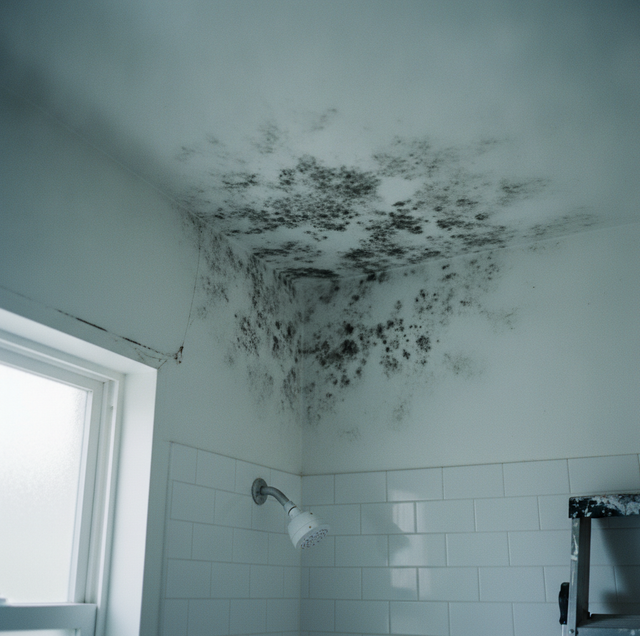
Quick Answer: Mildew grows on a bathroom ceiling because three things collect there at once: moisture from shower steam, warmth, and a food source in the paint film, soap residue, and dust. The ceiling is the coldest surface in the room, so steam condenses on it and lingers. Fix it by venting the room properly, killing the existing mildew instead of painting over it, drying fully, then repainting with a mildew-resistant bathroom paint.
You wipe the ceiling clean, put a fresh coat over it, and within a few months, the same gray-black speckling creeps back, worst right above the shower and in the corners. It is not bad luck, and it is not a flaw in the paint you bought. That spotting is mildew, a surface mold, and it keeps returning because the ceiling gives it everything it needs to live. Until you change the conditions, any coat you apply is just a fresh meal.
What Mildew Actually Is And Why Your Ceiling Feeds It
Mildew is a form of mold that grows on surfaces rather than inside them. Like any mold, it needs three things at the same time to take hold: moisture, warmth, and something to eat. Take away any one of the three, and it cannot colonize. A bathroom ceiling happens to deliver all three, which is why it is one of the most common places in a house to see mildew.
The food source surprises people. Mildew is not eating the plaster or drywall directly. It feeds on the thin organic layer that builds up on the ceiling over time: the binders in the paint film itself, the soap and body-oil film that shower steam carries upward, and ordinary household dust. A ceiling that looks clean to your eye is, to a mildew spore, a stocked pantry.
Warmth is the easy part. A bathroom during and after a shower is warm, and mildew is happy in the same temperature range you find comfortable. That leaves moisture, and moisture is where the whole problem lives.
Why Steam Ends Up On The Ceiling And Stays There
Think of your shower like a kettle left on the boil in a closed kitchen. The hot water throws warm, humid air into the room, and warm air rises. It climbs straight to the ceiling, which is almost always the coldest surface in the bathroom because there is unconditioned attic or roof space above it. When that warm, moisture-loaded air touches the cold ceiling, it does what warm air always does against a cold surface: it releases its water as condensation. A thin film of water forms across the ceiling, heaviest directly over the shower where the steam is thickest.
That film is the whole ballgame. If the room is vented well, the water evaporates and clears within minutes, and mildew never gets the sustained wet time it needs. If the room is not vented, that moisture sits on the ceiling for hours. Spores floating in every home's air settle onto damp, food-rich surfaces, and with moisture, warmth, and food all present at once, they germinate and spread. What you see weeks later, the gray and black speckles or blotches, is the visible colony.
This also explains the pattern. It is worst above the shower because that is where condensation is heaviest, and it is worst in the corners because air barely moves there. Corners are dead zones with the least airflow and often the coldest spots, so they stay damp the longest.
The Real Reasons It Keeps Coming Back
If mildew keeps returning after you clean and repaint, one or more of these conditions is still in place.
No exhaust fan, or one that does not do the job- A bathroom with no fan relies on an open window or an open door to clear humidity, and most people do neither mid-shower. Even with a fan, two hidden problems are common. The fan may be undersized for the room, so it cannot move the volume of humid air a shower produces. Or the fan may be venting into the attic instead of outdoors, which just relocates the moisture above the ceiling, making the ceiling colder and damper from the other side. A fan ducted into the attic can quietly make the problem worse.
Running the fan too briefly- Flipping the fan on and off with the light does very little. The humidity peak comes after the water stops, when all that steam is still in the room looking for a cold surface. The fan needs to run during the shower and for roughly 20 to 30 minutes afterward to effectively pull out lingering moisture.
A cold ceiling- The colder the ceiling relative to the room, the more condensation forms on it. Thin or missing insulation in the attic above the bathroom leaves the ceiling cold, so it collects more water than a well-insulated ceiling would. Two rooms with identical showers can have very different mildew problems purely because of what is above the drywall.
The wrong paint- A flat, low-grade paint with no mildew-resistant additive gives the colony an easy, porous foothold and holds moisture against the surface. It is the difference between a surface that sheds water and one that soaks it.
Mildew that was painted over instead of killed- This is the big one, and it deserves its own section.
Why Painting Over Mildew Never Works
Here is the trap almost everyone falls into. The ceiling looks stained, so you roll a fresh coat over the spots to hide them. For a few weeks, it looks solved. Then the same blotches bleed back through in the same places, and it feels like the mildew is stronger than the paint.
What actually happened is simpler. Mildew is a living organism, not a stain. When you paint over it, you do not kill it. You seal live mildew, and its spores under a new film, and that new film is itself a food source. The colony keeps growing on the surface it was already on, feeds on the fresh binders, and pushes back up through the coat you just applied. Covering it does nothing to remove the moisture and warmth keeping it alive, so it simply resumes. You have to kill and remove the existing growth first. Paint is the last step, not the fix.
How To Stop It, In Order
The sequence matters. Do these out of order, and you will be back on a ladder in a few months.
- Fix the ventilation first- This is the root cause, so it comes first. Make sure the room has an exhaust fan that is sized for the space and, critically, ducted to the outdoors rather than into the attic. Then change the habit: run the fan during every shower and leave it running 20 to 30 minutes after. A simple timer switch handles this without anyone having to remember.
- Kill the existing mildew. Do not just paint over it- Clean the growth off the ceiling with an appropriate mildew-killing cleaner and let it do its work, then rinse or wipe as directed. The goal is to remove the living colony down to the surface, not to smear it around. If the spots are stubborn, the surface still needs to be sound and clean before anything goes over it.
- Let it dry completely- Any trapped moisture will feed new growth right under your fresh coat. Give the ceiling real drying time with the fan running before you prime or paint.
- Repaint with a mildew-resistant bathroom paint- Choose a paint made for bathrooms and kitchens that contains a mildewcide, an additive intended to resist mildew growth on the dried film. Manufacturers describe these products as resisting mildew rather than preventing it permanently, so treat the additive as one layer of defense, not a substitute for ventilation. Go with a satin or semi-gloss sheen rather than flat. The tighter, slicker finish sheds water and wipes clean far better than a porous flat surface, which leaves less for condensation to cling to.
Get all four right, and you break the cycle, because you have removed the food, cut the moisture, and made the surface hostile to regrowth all at once.
Safety Before You Start
A few cautions worth taking seriously. Never mix bleach with ammonia or with any cleaner that contains ammonia. The combination produces a toxic gas. Read labels before you combine anything. Ventilate the room while you clean, wear gloves and eye protection, and keep fresh air moving. If the affected area is large, if the growth keeps returning no matter what you do, or if anyone in the home has asthma, allergies, or a weakened immune system, that is the point to stop and bring in a professional rather than pushing through it yourself. Recurring or widespread mold can signal a moisture problem bigger than the ceiling, and it is not worth the risk to your health to keep guessing.
Frequently Asked Questions
No, and it is the single most common mistake. Mildew is alive, so a new coat traps live spores against the surface and hands them a fresh food source in the paint binders. Within a few weeks, the colony grows back up through the film in the same spots. You have to physically kill and remove the growth first, let the ceiling dry, and only then paint. Skipping the kill step guarantees a repeat.
Look for a paint formulated for bathrooms and kitchens that contains a mildewcide, an additive that resists mildew forming on the cured film. Pair that with a satin or semi-gloss sheen rather than flat. The reason sheen matters is physical, not cosmetic: a slicker finish has a tighter surface that sheds condensation and wipes clean, while flat paint is porous and holds moisture and grime that feed growth. Treat the mildewcide as one defense among several, since it resists rather than permanently prevents.
A common sizing guideline is roughly 1 CFM of fan capacity per square foot of bathroom floor area, so a 60-square-foot bathroom points toward a fan around 60 CFM as a starting point, with larger or enclosed rooms needing more. Just as important, the fan must vent to the outdoors, not into the attic. For runtime, keep it going during the shower and for about 20 to 30 minutes afterward, because humidity peaks once the water stops and the steam is still hanging in the room.
There is a quick test. Dab a little diluted household bleach on an inconspicuous spot with a cotton swab and wait a minute. If the dark spot lightens or disappears, it is mildew, because bleach breaks down the organic growth. If it stays dark, you are probably looking at dirt, soot, or a stain, which wipes off mechanically rather than bleaching out. A smear test helps too: mildew tends to sit in a fuzzy or speckled pattern and often has a musty smell, while grime smears uniformly.
Those are the two worst spots for the same underlying reasons. Directly above the shower is where the steam is thickest and the condensation heaviest, so that patch of ceiling stays wet the longest. Corners are dead air: airflow barely reaches them, and they are frequently the coldest points on the ceiling where two exterior planes meet. Cold plus still air means moisture lingers there long after the rest of the ceiling has dried, giving mildew the extra wet time it needs.
Both matter, and they solve two different halves of the problem, so the honest answer is you want both. Ventilation removes the humid air before it can condense, attacking the moisture supply. Insulation keeps the ceiling warmer, so less condensation forms on it in the first place, attacking the cold surface. If you fix only ventilation but leave a freezing ceiling, you will still get some condensation on the coldest days. If you insulate but never clear the humid air, the moisture has nowhere to go. Ventilation is usually the higher-impact first move, but a cold, poorly insulated ceiling will keep undercutting even a good fan.
Book a free estimate for mildew-resistant bathroom repainting — get a ceiling that stays clean instead of fighting the same spots every few months. Elite Edge Painting & Remodeling serves Parkville, Baltimore, Towson. Call (443) 601-5233.
