
Why Does Harsh Weather Wear Out Exterior Paint So Fast?
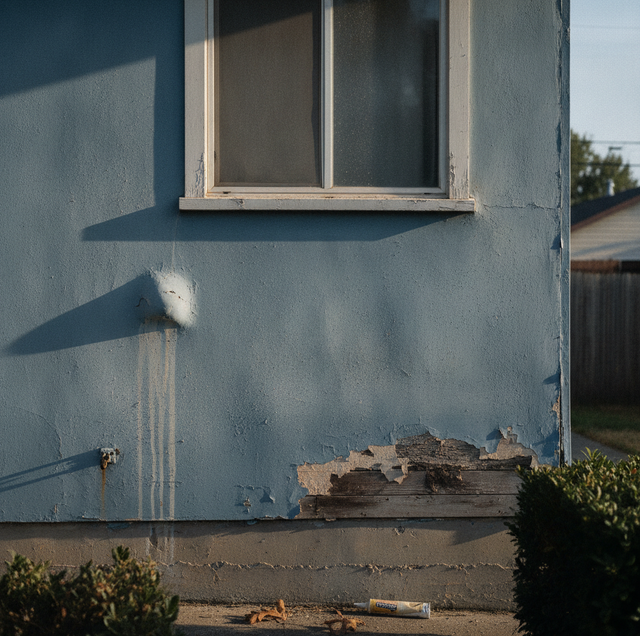
You had the house painted a few years ago, and already the south wall is chalky and faded, the trim is flaking, and a blister has lifted near a window. It feels too soon, and you start to wonder whether the painter cut a corner or the paint was no good. Sometimes that is the answer, but often the real culprit is the weather doing exactly what weather does to a coating exposed to it every day.
Exterior paint is not just color; it is a thin protective film fighting the elements around the clock. Understanding what wears it down explains why some walls fail early and why some paint jobs last.
Paint Is a Film Under Constant Attack
A coat of exterior paint is a flexible skin bonded to the surface, and it survives by two things: staying stuck and staying flexible enough to move with the wall as it expands and contracts. The weather attacks both. Sun degrades the film from above, moisture attacks it through every gap, and temperature swings flex it until it fatigues. A wall that faces the worst of all three ages fastest, which is why the sunny, weather-beaten side of a house always fails before the sheltered side.
The Sun Breaks Down the Binder
The most relentless force is ultraviolet light. Paint gets its toughness from a binder that holds the pigment together and to the wall, and UV radiation slowly breaks that binder down. As it degrades, the surface fades, then chalks, that powdery residue you get on your hand when you rub a weathered wall, and eventually loses its grip. This is why dark colors wear out faster than light ones: dark shades absorb more heat and UV, so they fade and break down sooner. It is also why the south- and west-facing walls, which take the most direct sun, are almost always the first to go.
Moisture Gets Behind the Film
Water is the second attacker, and it works from behind. Rain, snow, and humidity find their way into any gap, an unsealed seam, a hairline crack, bare wood, and settle behind the paint. From there, it pushes the film off the surface as blisters, and it feeds peeling and rot in the wood beneath. Moisture is especially punishing where caulk has failed, or the surface was not sealed, because those are the doorways it uses. A coating that looks fine on the surface can be lifting from behind wherever water has gotten in.
Freeze-Thaw Pries It Apart
In a climate with real winters, freeze-thaw cycles add a mechanical wrecking crew. Water seeps into tiny gaps in and under the paint film, and when the temperature drops, it freezes and expands, prying the film up from the surface. When it thaws, the lifted paint is left cracked or blistered, ready to flake. Repeat that cycle through a winter, and the damage accumulates fast. Meanwhile, the same wall bakes and expands in summer heat and contracts in winter cold, and a film that has lost its flexibility cracks along that stress. The paint is squeezed from both seasons: UV and heat in summer, freeze-thaw and moisture in winter.
Why Some Jobs Last and Others Don't
Weather is constant, but preparation and product determine how long a coating holds up against it. Paint applied over a dirty, glossy, or unprimed surface never grips well, so it surrenders to the sun and moisture years early. A quality paint with a durable binder and good flexibility resists UV breakdown and the expansion-contraction cycle far longer than a cut-rate one. And details like sealing gaps, priming bare spots, and caulking seams close the doorways to moisture. The weather will always attack the film; a proper job just makes it able to withstand it for many more years.
Catch It Early on the Walls That Fail First
Because the sun-and-weather side fails first, a quick habit saves money: walk the house once or twice a year and look hardest at the south and west walls and every seam, corner, and window surround. Fading and a chalky film are the first whispers, followed by hairline cracks and lifting edges. Touching up or repainting at the fading stage, before it flakes to bare surface, means far less scraping and a fresh coat that bonds to sound paint rather than raw wood. The walls that get the worst exposure are the ones worth watching most closely.
Frequently Asked Questions
A quality exterior paint job typically lasts about 7 to 10 years, but the range is wide because exposure, color, surface prep, and paint quality all affect the number. A well-painted, light-colored wall can last longer, while a dark, sun- and weather-beaten wall painted over poor prep can fail in a few years. The conditions the wall faces matter as much as the paint.
Because sun exposure is not equal around a house, and the difference is measurable. A south wall catches high sun across the whole day, while a west wall takes the low afternoon sun head-on at the same time the siding is already hottest, so those two sides absorb far more UV dose per year than a north wall that may see almost no direct sun. That extra UV breaks the binder down first, and the west wall usually faces the prevailing wind-driven rain as well, so it gets a double hit. A north or east wall on the same house can still look sound years after the south and west sides have chalked and lifted, which is why painters often spec a heavier or more UV-stable coating on just the sun sides rather than repainting the whole house on one schedule.
Two things happen with a dark wall. It absorbs more solar heat, so a dark south-facing surface can run much hotter than a pale one in the same sun, and that heat both accelerates binder breakdown and drives more expansion and contraction throughout the day. And the colorants themselves matter: some deep hues lean on organic pigments (many reds, bright blues, some vivid tones) that photodegrade faster, while inorganic mineral pigments like iron oxides and the fade-resistant colorants sold for exterior use hold their color much longer. So if you want a dark or saturated color on a sun wall, ask for it tinted with fade-resistant or inorganic colorants rather than a standard interior-grade base, and expect it to still need refreshing a little sooner than a light neutral.
Blisters are almost always moisture or heat lifting the film from the surface. Water that got behind the paint, through an unsealed gap or bare wood, pushes it up, and painting in direct hot sun can also trap moisture and bubble the film. Blistering that keeps returning in the same spot usually means water is getting in there and needs to be stopped before repainting.
Significantly, yes, and film thickness is the part homeowners rarely hear about. Paint only protects at the thickness the manufacturer specifies, usually stated as a dry-film mil range on the data sheet, and that thickness is what you get from two full coats, not one coat stretched thin. A single pass over bare or patchy siding often dries below spec, and a thin film loses UV and moisture resistance early, no matter how good the paint is. So the durable job is: wash off the chalk and grime, spot-prime every bare and repaired area (a bonding primer on slick or previously glossy spots), caulk the moving seams, then lay two coats to build the film. Skip the primer or the second coat, and even premium paint surrenders early because the coating never reaches the thickness it was engineered to withstand.
Catch it with a rub test: drag a dry dark cloth or your palm down the sunniest wall, and if it comes away with a powdery film, the surface is chalking and the binder is already breaking down. That is the moment to repaint, before the chalk turns into cracks and flakes, because painting over sound, faded paint means far less scraping and a much better bond than painting over bare, weathered wood. Timing the application matters as much as timing the year: paint needs the surface to be dry and the air above the dew point, so avoid coating a wall that is still damp from overnight condensation, and stop early enough in the day that a fresh film can set before evening dew settles back on it. A coat that gets wet before it cures can blush, bubble, or lose adhesion, which undoes the whole point of repainting early.
The Weather Wins Unless the Paint Is Built to Last
Exterior paint fades and fails quickly when the weather outpaces the film, and the weather never lets up: UV and heat break down the binder in summer, moisture lifts it from behind, and freeze-thaw cycles pry it apart in winter. Dark colors and sun-facing walls feel it first. You cannot change the climate, but you can change the outcome, because thorough prep and a quality, flexible paint are what let a coating take years of that punishment instead of surrendering in a few seasons.
If your paint is fading or peeling sooner than it should, the fix is in the prep and the product. Elite Edge Painting & Remodeling serves Parkville, Baltimore, Towson, and the surrounding area. Call (443) 601-5233 for a free estimate.
