
Primer vs. Paint-and-Primer-in-One: When Each One Wins
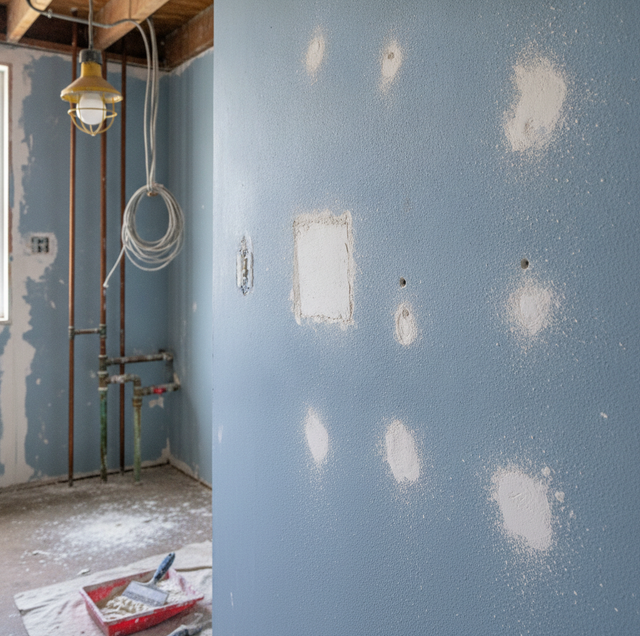
Quick Answer: Primer is a bonding and sealing coat, not a color coat. A separate primer is required on bare drywall, new or knotty wood, patched or skim-coated spots, stains, big color changes, glossy surfaces, and problem materials like masonry and metal. Paint-and-primer-in-one is only a real substitute on a clean, sound, previously painted wall you are recoating in a similar color.
Walk down the paint aisle, and you will see two things fighting for the same shelf space: cans labeled primer, and cans that promise paint and primer in one. It is a fair question to ask whether the second one lets you skip a whole step. Sometimes it does. Often it does not. The answer depends entirely on what is under your brush, and understanding what a primer is built to do makes the choice obvious before you ever open a can.
What A Primer Actually Does
Primer and paint are formulated for two different jobs. Paint is built for the things you see and touch: color, sheen, washability, and resistance to sun and moisture. Primer is built for the things you do not see: it prepares the surface so the paint can do its job.
A primer does four specific things. First, it seals porous or patched surfaces so they stop drinking in the coats above them. Raw drywall paper, joint compound, bare wood, and fresh spackle all soak up liquid at different rates, and a sealing coat evens out that thirst. Second, it blocks stains from bleeding up through the finish, whether that is a water ring, a smoke haze, or the natural tannins in wood. Third, it gives the topcoat something to grip. Many finished surfaces are too slick for paint to hold onto on its own, and a primer creates a mechanical and chemical anchor. Fourth, it evens out color and sheen, laying down a uniform base so the finish reads the same everywhere and usually needs fewer coats to look solid.
Primer is the drywall mud and tape of the paint world: nobody admires it once the job is done, but skip it in the wrong spot and every flaw underneath telegraphs straight through the pretty coat on top.
What Paint-and-Primer-in-One Really Is
Here is the part that the label does not spell out. Paint-and-primer-in-one is not two products in a can. It is one product: a paint made with a higher solids content, meaning more binder and pigment and less thinner. That thicker, richer formula lets it seal and adhere better than ordinary paint, so on the right surface it can carry its own weight, as a primer would.
The keywords are the right surface. A self-priming paint can act like its own primer only on a surface that was already sound to begin with: clean, previously painted, in good condition, and not asking the coating to do anything heroic. It leans on the old paint film beneath it for the sealing and gripping that a dedicated primer would otherwise supply. Take that sound base away, and the paint must be primer and paint at once, which is exactly what it cannot reliably do. It has more solids than regular paint, not the specialized stain-blocking or bonding chemistry a true primer is engineered around.
When Paint-and-Primer-in-One Is Enough
The green-light case is narrow but common. You are recoating an interior wall that already has a coat of paint on it. The surface is clean, sound, and free of peeling or chalking. You are going from one color to a similar one, or refreshing the same color. There are no patches, no stains, no bare spots showing through, and the existing sheen is not high-gloss.
On that wall, a paint-and-primer-in-one is a sensible pick. The old paint is already doing the sealing and bonding groundwork, so the higher-solids formula just needs to lay down fresh color and hide the coat below. This everyday repaint accounts for a large share of interior work, which is why these products earned their shelf space in the first place.
When You Still Need A Dedicated Primer
Wherever the surface is not already a sound-painted film, a separate primer earns its place. The common cases:
- Bare drywall- New drywall is a mix of paper facing and dried joint compound, and the two absorb paint at different rates. A drywall primer, usually a PVA type, seals both so the finish looks uniform instead of blotchy.
- New or knotty wood- Raw wood is thirsty, and its knots and resins will bleed through most paints. New wood wants a primer, and knots specifically call for a stain-blocking shellac or oil-based primer to lock the resin down.
- Bare or patched spots- Anywhere you have skim-coated, spackled, or sanded down to the substrate, that repair is a raw surface surrounded by a finished wall. Primer seals the patch so it does not flash or read as a dull spot through the topcoat.
- Stains- Water, smoke, rust, and tannin stains will wick up through ordinary paint, no matter how many coats you pile on. A stain-blocking primer seals them off first.
- Drastic color changes- Covering a deep or dark color with a light one, or the reverse, is far easier over a primer, especially one tinted toward the new color, because it kills the old shade, so fewer finish coats are needed.
- Glossy surfaces- Slick, high-gloss finishes give paint nothing to hold. These need a bonding primer, or a scuff-sand and de-gloss, before any color goes on.
- Problem materials- Masonry, concrete, and bare metal each have their own chemistry, and each calls for a primer matched to it. Bare metal needs a rust-inhibiting primer, and fresh masonry needs a masonry-rated one.
In every one of these, a paint-and-primer-in-one is being asked to do the one thing it cannot: prime a surface that has no sound coating to lean on. That is the line between the two products.
How To Decide In About Ten Seconds
Look at the surface and ask one question: is this a clean, sound, already-painted wall in good shape that I am recoating in a similar color? If yes, a quality paint-and-primer-in-one will handle it. If the surface is bare, patched, stained, glossy, made of masonry or metal, or you are making a dramatic color jump, reach for a dedicated primer first, then paint. When in doubt, prime. A primer coat is cheap insurance against a finish that flashes, peels, or lets an old stain ghost back through weeks later.
Frequently Asked Questions
Primer seals a porous or patched surface so the topcoat does not soak in unevenly and dry to a patchy, dull-and-shiny result, a defect painters call flashing. It also grips the surface below and lays down a uniform base for the color coat to sit on. Paint is formulated for color, washability, and sun and moisture resistance, not for sealing raw substrate or bonding to a difficult surface, so on anything that is not already a sound painted film, primer does work, the paint was never engineered to do.
Yes, but only on a clean, sound, already-painted wall in good condition that you are recoating in a similar color. One practical tell that it is still a paint and not a primer: a self-priming coat usually needs two coats to build enough film to seal at all, whereas a dedicated primer carries a higher resin-to-pigment ratio, and that extra resin is what does the actual sealing on bare or stained work. Put it on a raw, porous, or stained surface, and it fails there, because it never had the sealing chemistry to lean on.
Yes. A PVA primer is the cheap, purpose-made answer here: it is formulated to soak into the paper facing and the dried joint compound at the same rate, which is the whole point of new drywall, since those two surfaces drink at different speeds. Skip it, and the defect has a name, joint banding, where the mudded seams telegraph through as shiny lines against the flatter paper around them. Pull a PVA primer across the wall first, so both surfaces read as a single uniform base for the finish coats.
Reach for a dedicated primer rather than relying on extra coats of paint, and have it tinted gray rather than white when a deep or bright topcoat goes over it, since a gray base reduces the number of finish coats far more than a white one under strong colors. For stains, reach for a shellac-based primer: it dries fast enough to recoat in about an hour, and it locks in smoke, water, and wood tannin that ordinary latex would let wick straight back through, sometimes weeks after the job looks done.
Not reliably. Scuff-sand the surface with roughly 220-grit and wipe it down with a liquid de-glosser first, which gives a bonding primer the tooth it needs to actually hold. This matters most on a glossy alkyd or oil surface: latex laid straight over slick oil will let go and peel off in sheets later, even when it looks fine the day you paint it. A paint-and-primer-in-one does not fix this, since a slick surface is exactly where its self-priming claim runs out.
Primer is usually sold in white or gray, and tinting it toward your finish color improves coverage and can save you a topcoat, though it doesn't have to match exactly. Type matters more than color. A latex primer handles most interior jobs, but bare wood knots and heavy stains call for a shellac or oil-based primer regardless of whether your topcoat is latex, because only those seal resins and stubborn stains. In short, match the primer to the surface and its problems first, then tint it toward the color.
Book a free painting estimate — get walls that go on smooth and stay put. Elite Edge Painting & Remodeling serves Parkville, Baltimore, Towson. Call (443) 601-5233.
