
Durable Flooring for High-Traffic Rooms: What Lasts
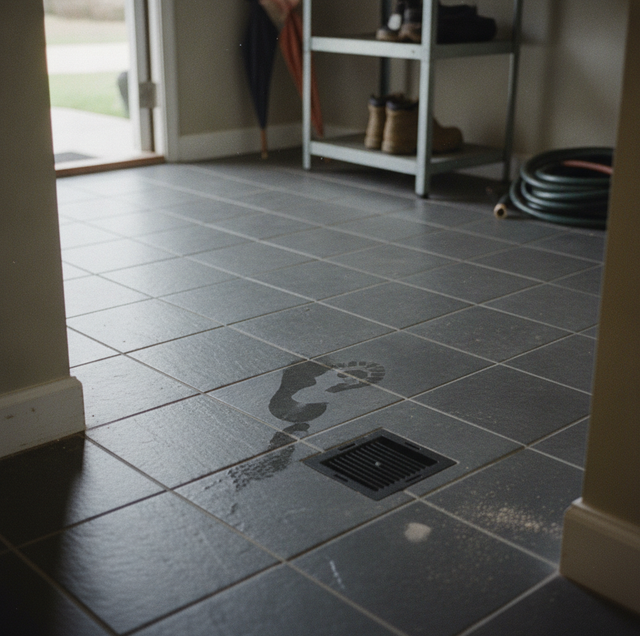
Walk your house barefoot, and you'll feel where the wear lives. The entry where shoes land, the kitchen where you pivot at the sink, the hallway everyone funnels through, the mudroom that catches wet boots. These rooms take more abuse in a month than a guest bedroom sees in a year, and the flooring you pick for them has to survive three separate kinds of punishment: scratches from grit and claws, dents from heavy furniture and dropped objects, and moisture from spills and tracked-in water. A floor that shrugs off one of those can fail badly at the other two. Picking well starts with knowing which stress a given room actually delivers, then matching the floor's specs to that stress instead of to the swatch that looks nicest in the showroom.
Why High-Traffic Floors Fail in Three Different Ways
Wear is not one problem. Think of a floor the way you'd think of a work boot. The outer skin has to resist cutting and abrasion, the sole has to resist crushing, and the whole thing has to keep water out. Fail any one and the boot is done, even if the other two are perfect. Flooring works the same way.
Scratches are surface damage. Sand, road grit, and pet nails act like sandpaper dragged across the top of the floor, dulling the finish and leaving lines. Dents are structural damage: a chair leg, a barstool, or a dropped cast-iron pan pushes down hard enough to compress the material and leave a permanent divot. Moisture is a slower, sneakier failure. Standing water from a dishwasher leak or a snow-melted boot pile seeps into seams, and materials that absorb it swell, cup, or delaminate from the inside out.
The reason this matters: a floor can be excellent at one and poor at another. A very hard surface can resist scratches beautifully and still crack or chip under a sharp impact. A waterproof material can withstand a flood and still show every scuff from a dragged stool. So the useful question in a busy room is not "is this durable" but "durable against what, and does that match what this room dishes out."
Luxury Vinyl Plank: The Waterproof Workhorse
Rigid-core luxury vinyl plank, usually shortened to LVP, has become the default for busy wet rooms for good reason. The plank is built in layers over a stiff core, and the good versions are waterproof top to bottom, so a spill that sits for an hour does nothing. It resists scratches and dents better than most wood options, feels warmer and quieter underfoot than tile, and installs over many existing subfloors. For an entry, a kitchen, or a mudroom, it hits the combination most people actually need.
The spec that separates a floor that lasts from one that dulls in two years is the wear layer, and it's worth knowing what to ask for before you commit. Within the LVP family, that number is the single best predictor of how the floor holds up under real traffic, and it's the detail cheaper products quietly shortchange.
Porcelain and Ceramic Tile: Hardest Surface, Coldest Feel
Tile is the toughest option in terms of scratch and moisture. Fired porcelain and ceramic are extremely hard, fully waterproof on the tile face, and nearly impossible to scratch with normal household grit. In a mudroom or an entry that sees snow, sand, and dog traffic, nothing outlasts a properly rated tile.
The trade-offs are real, though. Tile is hard and cold underfoot, which is tiring in a kitchen where you stand for long stretches, and a heavy object dropped just right can chip or crack a tile even though it won't scratch. The other maintenance reality is grout: the tile itself is waterproof, but the grout lines between tiles are porous and will stain and harbor grime unless they're sealed and kept up. For wet, high-traffic areas, choosing a slip-resistant, textured tile matters as much as hardness, because a glossy tile becomes a hazard the moment it gets wet.
Engineered Hardwood: Real Wood That Moves Less
If you want the look and feel of genuine wood in a busier room, engineered hardwood is the version built to handle it. It's a real hardwood veneer bonded over a cross-layered plywood core, and that core makes it far more dimensionally stable than a solid board, so it expands and contracts less as humidity swings through the year. That stability is why it tolerates a kitchen better than solid wood does.
What it will not do is defy physics. It's still wood, so it dents under a dropped pan and scratches under grit and claws, and it's only water-resistant, not waterproof. The redeeming trait is repairability, which is where wood pulls ahead of every synthetic option. For a formal entry or a hallway where you value the real material and can respect it a little, engineered wood earns its place.
Laminate: Scratch-Tough on a Budget
Laminate often gets confused with vinyl, but it's a different animal. It's a photographic image of wood or stone under a tough, clear melamine wear surface, all pressed over a fiberboard core. That top surface is quite hard and one of the better scratch-resisters in the lineup, which is why laminate holds up well in dry, high-traffic zones like hallways and living rooms.
Its weakness is water. The core is fiberboard, and if water works into the seams and sits there, the planks swell at the edges and won't recover. Newer water-resistant laminates handle a quick wipe-up fine, but they are not the equal of rigid-core vinyl or tile in a room where standing water is a real risk. Match laminate to dry traffic, and it's a strong value; put it in a mudroom, and you're gambling.
What to Avoid in Wet, Busy Rooms
Two popular choices punch below their weight where water and heavy traffic meet. Solid hardwood, for all its beauty, scratches easily, dents readily, and moves with humidity, so it's a poor fit for a mudroom or a kitchen prone to spills. And thin, flexible peel-and-stick or low-end flexible vinyl, the kind with almost no wear layer and no rigid core, dents under furniture and telegraphs every bump in the subfloor. Both can look fine on day one and disappoint within a season of real use.
Match the Spec to the Room
Here's the practical way to shop. First, name the room's dominant stress. A kitchen and an entry are moisture-plus-traffic rooms, so they want waterproof, high-wear options: rigid-core LVP or a floor-rated, slip-resistant tile. A hallway or a family room is a traffic-and-scratch room that stays mostly dry, so a high-wear laminate or engineered wood works well and gives you the look you want. A mudroom is the harshest case, wet and gritty at once, which is why tile or a thick-wear-layer LVP is the honest answer there.
Then check the one spec that governs durability for whichever material you chose. Each flooring type has a printed rating that tells you how much traffic it's built for, and using the wrong grade in the wrong room is the most common way people end up disappointed. The FAQs below walk through each of those ratings so you can read a spec sheet and know whether the product in front of you is built for a closet or built for the busiest room in the house.
Comfort and cleaning matter too, and they cut against each other. The hardest, most waterproof floors are also the coldest and least forgiving to stand on, while the warmer, softer options ask for a little more care around water. There's no single winner, only the right match for how a given room gets used.
Frequently Asked Questions
The wear layer is the clear top coating that sits over the printed design image on a vinyl plank, and it's measured in mils. It's the sacrificial shield that takes the abrasion, so the pattern underneath stays intact. A thicker wear layer resists scratches and traffic scuffing for longer before it dulls, so a high-traffic room like a kitchen or entry wants a thicker, commercial-grade wear layer, while a spare bedroom that sees light use can get away with a thinner one. When two vinyl planks look identical, this number is usually what separates the one that lasts from the one that wears through.
PEI is a hardness and abrasion rating for tile, sorted into classes, that indicates how much foot traffic the glazed surface can withstand before it visibly wears. Floors in busy rooms require a higher PEI class rated specifically for heavy foot traffic. The mistake to avoid is installing a low-PEI tile meant for walls or light-duty use on a floor that sees daily boots and grit, because that lighter-duty tile abrades and scratches underfoot and loses its finish fast. Checking the PEI class before buying keeps you from putting a decorative wall tile where a floor tile belongs.
AC stands for Abrasion Class, the scale that grades how well a laminate's wear surface resists rubbing and traffic. The higher the AC number, the more traffic the floor is built to survive. A closet or a lightly used room can use a lower-rated laminate, but an entry or a hallway that funnels the whole household needs a higher AC rating to avoid wearing through in the walk paths. Reading the AC number is the quickest way to tell whether a laminate is a residential-light product or one built for genuine high traffic.
There's a real line between the two, and it decides which rooms a floor belongs in. Rigid-core LVP and porcelain tile are fully waterproof: water can sit on them without being absorbed or causing swelling. Laminate and engineered wood are only water-resistant, meaning they tolerate a quick wipe-up but will swell, cup, or delaminate if water pools and sits, because both have cores that absorb moisture. That difference is exactly why a kitchen or a mudroom, where standing water is a when-not-if situation, should get a truly waterproof floor rather than a water-resistant one.
It depends entirely on the material. Solid and engineered hardwood can be sanded down and refinished, which erases surface scratches and light dents and gives you a fresh top coat, though there's a limit to how many times it can be done since each sanding removes a layer of wood. Engineered wood's thinner veneer allows fewer refinishes than a solid board. LVP, laminate, and tile cannot be refinished at all, so when one of those is damaged past cosmetic help, the fix is to swap out the affected plank or tile rather than resurface the floor. That repairability is a genuine point in wood's favor if you plan to keep the floor for a long time.
They come from two different parts of the floor and don't rise and fall together. Scratch resistance lives in the hardness of the surface layer: a tough top coat shrugs off the grit under your shoes and a dog's nails without leaving lines. Dent resistance comes from the density and firmness of the core underneath, its ability not to compress when a heavy chair leg or a dropped skillet lands on one spot. A floor can be strong at one end and weak at the other, which is why a hard-surfaced but soft-cored product scratches well but dents easily. A good high-traffic floor needs both a hard face and a firm core, so it's worth checking each separately rather than trusting a single durability claim.
Book a free flooring consultation — get the right durable floor matched to each room in your home. Elite Edge Painting & Remodeling serves Parkville, Baltimore, Towson. Call (443) 601-5233.
