
How Roof Ventilation Affects Shingle Life (And Cuts It Short)
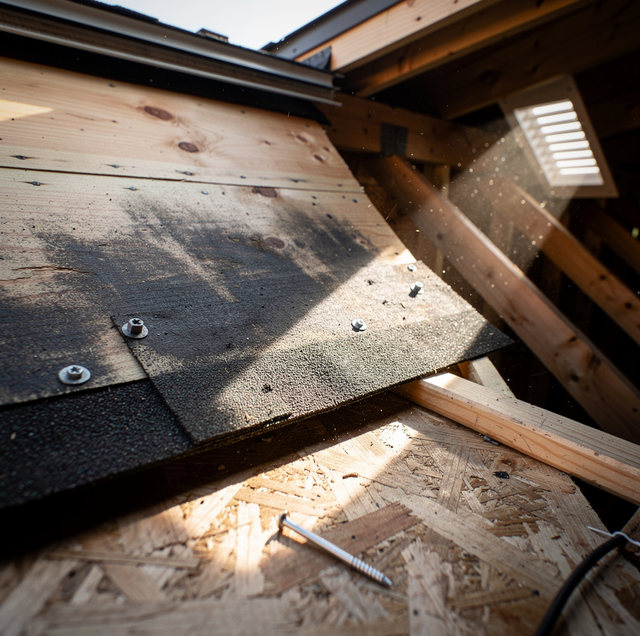
A shingle warranty is written for a roof that breathes. Manufacturers test their products assuming a specific amount of air moves through the attic below, carrying heat and moisture out before either can cause damage. Skip that airflow, and the same shingles rated for twenty-five or thirty years can start showing wear in half that time, even though nothing about the shingles themselves changed. The roof deck underneath is doing something different, and the shingles are paying for it.
How A Sealed Attic Traps Heat Against The Roof Deck
An attic without sufficient intake and exhaust airflow behaves like a closed box sitting beneath a dark surface in direct sunlight. Heat radiates through the roof deck and has nowhere to go, so it builds. Attic temperatures in a poorly vented space can run well above the outdoor air temperature on a sunny afternoon, sometimes by 40 degrees or more, because the heat that should be venting through the ridge or gable vents instead sits against the underside of the decking.
That trapped heat doesn't stay in the attic. It conducts upward through the roof deck into the shingles themselves, adding to the heat they're already absorbing from direct sunlight. Shingles are built to handle sun exposure; asphalt shingle chemistry accounts for that. What the chemistry doesn't account for as well is heat pressing in from both sides at once, from the sun above and a superheated attic below, for hours at a stretch, day after day, for the life of the roof.
Why Extra Heat Ages Asphalt Shingles Faster From Underneath
Asphalt shingles rely on oils in the asphalt coating to keep the mat flexible and the granules bonded to the surface. Heat drives those oils toward evaporation over time, which is a normal part of aging, but the rate at which it happens is not fixed. Higher sustained temperatures speed up that process, just as food left in a warm room spoils faster than food kept cool. A roof deck baking from attic heat below is essentially aging the shingle from the back side, on top of the aging it's already getting from sun on the front.
The visible result usually shows up as curling or cupping at the shingle edges, along with granule loss that leaves bald-looking patches where the underlying asphalt is exposed to direct UV. Curled shingle edges catch wind more easily, which raises the odds of a shingle lifting or tearing off in a storm well before its expected replacement year. None of this requires a manufacturing defect or a bad batch of shingles. It's a predictable outcome of asking a roof covering to shed heat from two directions when the design only planned for one.
How Trapped Moisture Leads To Mold And Deck Rot
Heat isn't the only thing that needs somewhere to go. Every household generates water vapor from showers, cooking, laundry, and simple breathing, and some of that vapor migrates upward into the attic through light fixtures, attic hatches, and gaps around plumbing stacks, especially in colder months when the temperature difference between living space and attic pulls moisture upward. A properly vented attic carries that vapor out through exhaust vents before it condenses. A poorly vented one lets it collect.
Once warm, moist air meets the cooler underside of the roof deck, especially overnight or during a cold snap, it condenses into water droplets on the wood. That moisture doesn't evaporate quickly in a space with no airflow, so it sits, and repeated condensation cycles are what start real damage: dark staining on the sheathing, a musty smell in the attic, and eventually the soft, delaminating wood that signals rot in the roof deck itself. Mold colonizes that same damp wood, feeding on the wood fibers and organic dust in insulation.
The shingles fastened to that softened deck lose their grip. Nails that once held tight in solid wood start to work loose as the wood around them degrades, and a soft deck flexes underfoot in a way solid decking never should, which is one reason a roofer walking a roof for any other repair will often check the deck's firmness as a matter of course.
Signs Of A Ventilation Problem You Can Actually See
Most ventilation problems announce themselves well before a roof needs full replacement, if someone knows where to look. An attic inspection on a hot day is the most direct test: air that feels noticeably hotter and more stagnant than the outdoors, or visible heat shimmer near the roof deck, points to inadequate airflow. Dark streaking or water stains on the underside of the sheathing, especially near the ridge where hot air should be escaping, are a strong sign that moisture has been condensing there instead of venting out.
A few other clues show up outside the attic. Uneven shingle wear, where one section of roof looks noticeably more curled, faded, or granule-bare than the rest of the same roof facing the same sun exposure, often traces back to a dead zone in the airflow path, a spot where hot air pools because nothing is pulling it out. Frost on the underside of the roof deck in cold weather, visible as a light coating when you first climb into the attic on a winter morning, is condensed moisture that hasn't had a chance to vent and is a close cousin to the conditions that also feed ice buildup along the eaves. When warm attic air melts snow on the upper roof while the unheated eaves stay cold, the meltwater refreezes at the edge and can back up under the shingles, and a roof already running hot from poor ventilation is more prone to that cycle repeating through a winter.
Inside the house, a musty smell in an upstairs closet, peeling paint on a soffit, or a spike in cooling costs during warm weather can all point back to the same attic airflow problem, even though none of those symptoms look like a roofing issue at first glance.
Balanced Intake And Exhaust Ventilation Basics
A functioning attic ventilation system needs two matched halves working together: intake low on the roof, usually through vents cut into the soffit or eave, and exhaust high on the roof, through a ridge vent, gable vents, or box vents near the peak. Cooler outside air enters low, picks up heat and moisture as it rises through the attic space, and exits high, creating continuous airflow rather than a single vent trying to do both jobs at once.
Balance matters as much as total vent area. A roof with generous exhaust vents but soffit vents blocked by insulation, paint, or debris can't pull in enough replacement air, so the exhaust vents end up doing very little. The reverse causes its own problem: plenty of intake with too little exhaust area leaves incoming air with nowhere to escape, and it can even pull moist air backward through the exhaust vents on a windy day. Manufacturers and ventilation guidelines generally call for a set ratio of vent area to attic floor space, split roughly evenly between intake and exhaust, though the right mix for a given roof depends on its shape, insulation, and how the attic is used.
Baffles installed at the eaves, which hold insulation back from blocking the soffit vents, are a small detail that makes an outsized difference, since even a well-designed vent system fails if insulation is stuffed up against it. A roof with a complicated shape, multiple additions, or a finished attic space often needs a mix of vent types to move airflow through every section rather than just a simple run from eave to ridge.
Weighing Ventilation Against Other Factors In Shingle Life
None of this means ventilation is the only thing that determines how long a roof lasts. Shingle quality, installation workmanship, roof pitch, tree cover, and storm exposure all play a real part, and a well-ventilated roof installed with poor nailing technique or under-driven fasteners can still fail early for reasons unrelated to airflow. Ventilation is also not something that can fully undo a shingle choice mismatched to the climate, or make up for a roof that's simply past its expected service life.
What ventilation does is remove one variable that otherwise works against every other factor at once. A well-ventilated attic won't turn a marginal shingle into a premium one, but it keeps heat and moisture from compounding whatever wear the shingles are already taking on from sun, weather, and time. That's why a roof inspection worth trusting looks at the attic as closely as it looks at the shingles on top, since a roof covering can look fine from the ground while the space underneath it is quietly working against it.
Frequently Asked Questions
Adding a ridge vent by itself can do more harm than good if the soffit intake isn't opened up to match it. A ridge vent with no matching intake can starve for air and, in some conditions, pull air backward through gaps and gable vents instead of drawing it up from the eaves, which disrupts airflow rather than creating it. A contractor evaluating an older roof for a ridge vent retrofit will typically check soffit vent area and whether insulation baffles are in place before cutting the ridge slot, since installing the exhaust first without securing intake defeats the purpose.
A powered fan can move more air than passive vents alone, but it isn't a substitute for balanced intake, since a fan pulling air with no adequate soffit intake will draw conditioned air up from the living space through ceiling gaps instead, which raises cooling costs and pulls indoor moisture into the attic rather than keeping it out. Powered fans are also strictly a warm-weather solution; they do nothing for the winter condensation and ice-dam-adjacent moisture buildup that balanced passive ventilation addresses year-round.
There's no single fixed number since it depends on shingle type, roof color, and climate, but manufacturers' own testing and ventilation standards are built around the assumption that excess attic heat measurably shortens service life, which is part of why many shingle warranties include a ventilation requirement and can be reduced or voided if the attic clearly wasn't vented to spec. The practical effect is that two identical roofs installed the same year, one properly vented and one not, commonly show a visible difference in curling and granule loss well before either reaches its rated lifespan.
Yes. Every penetration through the roof deck, a skylight shaft, plumbing vent stack, or chimney, interrupts the open attic space that air needs to travel through and can create a dead pocket nearby where hot, moist air stalls instead of reaching an exhaust vent. A roof with several penetrations clustered in one section sometimes needs an additional nearby vent to keep that section from becoming a localized hot spot, even if the rest of the attic tests fine.
A musty smell is usually due to condensation-related mold or mildew, which points back to trapped moisture, but it isn't automatically a ventilation defect. The same smell can come from a plumbing vent that terminates inside the attic rather than through the roof, a bathroom exhaust fan ducted into the attic rather than outside, or a small roof leak that feeds moisture into the insulation. Ventilation is the first thing to rule out, but tracing the actual moisture source matters before assuming new vents alone will fix it.
It does. Adding insulation without checking soffit clearance is one of the most common ways a previously fine ventilation system gets blocked, since loose-fill or batt insulation pushed too far toward the eaves buries the intake vents entirely. Spray foam applied directly to the underside of the roof deck changes the equation further, since that approach is designed to seal the attic rather than vent it, and it follows a different set of rules than a traditional vented attic with insulation on the floor.
Schedule a roof and attic ventilation inspection — find out whether trapped heat or moisture is quietly shortening your shingles' lifespan. Elite Edge Painting & Remodeling serves Parkville, Baltimore, and Towson. Call (443) 601-5233.
