
Why Is My Deck Graying and Splintering? The Real Cause
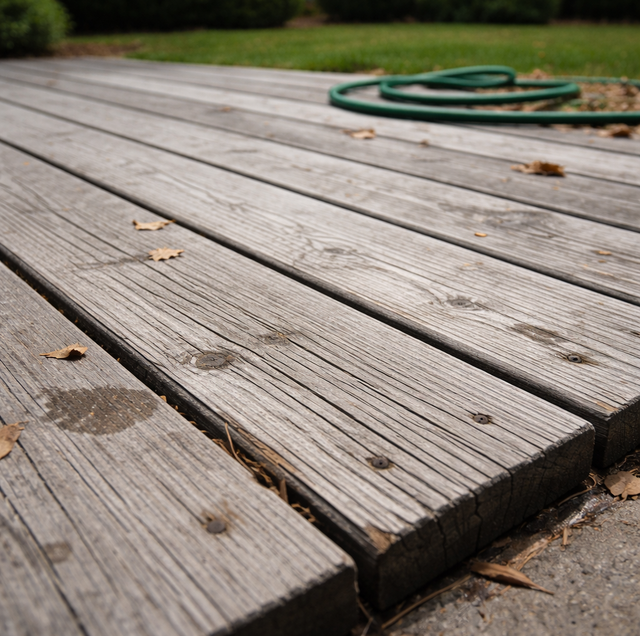
Quick Answer: A deck grays because sunlight destroys the natural glue that holds wood fibers together, and it splinters once the protective finish wears off and moisture starts swelling and shrinking the boards. Gray wood is usually still solid, not rotten, and most decks can be cleaned, brightened, sanded, and re-sealed rather than replaced.
You walk out barefoot on a summer morning, and the deck that used to be warm and honey-colored is now a dull silver-gray, with tiny fibers lifting off the surface that catch on your feet. It looks tired. It feels rough. And it raises a fair question: is the wood dying, or just dirty? The good news is that graying and splintering are almost always surface problems with a surface fix, but the reasons behind them are worth understanding before you pick up a brush or a sander.
What Actually Turns Deck Wood Gray
Wood is held together by a natural substance called lignin. It fills the spaces between the long cellulose fibers and acts as the glue that binds them into a stiff, connected surface. Lignin is also the part of the wood that gives fresh lumber its warm brown and amber tones.
Sunlight is what undoes it. Ultraviolet light carries enough energy to break the chemical bonds in lignin at the very top layer of the board. As those bonds break, the lignin degrades and washes away with rain, leaving behind loose, bleached cellulose fibers with no color and no binder holding the top surface together. That thin layer of exposed, colorless fiber is the gray you see. It is not dirt, and it usually is not mold. It is the wood's own structure coming apart at the surface, one fiber-thin layer at a time.
This is why a deck grays fastest on the boards that get the most direct sun and slower under a table, a planter, or a stair tread that stays shaded. The gray follows the light.
Gray is a surface story, not a depth story: Here is the part that surprises people: the graying only reaches down a very thin distance, often less than the thickness of a fingernail. Below that bleached skin, the wood is frequently still brown, sound, and perfectly usable. That single fact is what makes most gray decks worth saving rather than tearing out.
Why the Boards Start Splintering
Graying and splintering are related but not the same event. Graying is UV chemistry. Splintering is mechanical, and it comes down to the finish giving up and moisture taking over.
When a deck is new, a stain or sealer sits on and just inside the wood, slowing how fast water moves in and out. Over a few years of sun, rain, and foot traffic, that finish thins and fails. Once it is gone, the bare wood becomes a sponge that reacts to every change in weather.
Moisture cycling is the real culprit: Wood swells when it takes on water and shrinks as it dries. Every rain, every heavy dew, every humid stretch pushes moisture in, and every dry sunny spell pulls it back out. The surface and the core do not move at the same rate, so the top layer is under constant push-and-pull stress. Over hundreds of these cycles, the outer fibers loosen, lift, and stand up off the surface as raised grain. Those raised fibers are your splinters waiting to happen.
The seasons attack from both directions, which is why this never really stops. In the hot, dry stretches, intense sun bakes moisture out of the surface fast and bleaches it. In wet and freezing stretches, water soaks in, and any of it trapped in the fibers expands as it freezes, prying the surface apart from the inside. Summer dries and lightens the wood; the cold, wet months raise and loosen the grain. A deck sees both every year, so the damage compounds no matter the month.
Foot traffic finishes the job. Once fibers are already loose and standing, shoes, dragged chairs, pet claws, and bare feet snap and peel them, turning a rough patch into a genuine splinter hazard. Softwoods like pressure-treated pine and cedar show this sooner than dense hardwoods because their fibers are easier to lift.
Is Gray Wood Still Sound, or Is It Rotting?
This is the question that decides everything, and you can answer most of it yourself. Gray is a cosmetic condition. Rot is a structural one, and they are not the same thing.
Press a screwdriver or awl tip firmly into a few boards, especially near the ends, around fasteners, and anywhere that stays damp or shaded. Sound wood resists and feels firm, while wood that lets the tip sink in easily or feels spongy has decay rather than just weathering.
There is an important line here. The walking surface, the boards and railings you can reach and test, is one thing. The structure underneath, the joists, beams, ledger board bolted to the house, and support posts, is another.
Hidden rot in a deck's load-bearing parts, the joists, beams, ledger board, and posts, is a safety matter you cannot judge from the top of a good-looking board. If your probe finds soft spots, if boards feel bouncy underfoot, or if the deck is more than a decade old and never inspected, have a professional assess the framing and the ledger connection before you refinish the surface.
How to Bring a Gray Deck Back
Assuming the structure is sound and the boards pass the probe test, restoration follows a clear order. Skipping steps is the most common reason a refinished deck looks bad or fails early.
1. Clean and brighten: Start by clearing the surface of that dead gray fiber layer and the grime on top of it. A dedicated deck cleaner, used strictly per the label with gloves, eye protection, and good ventilation, loosens the degraded surface so it can be rinsed away. Many restoration products pair a cleaner with a separate wood brightener; the brightener resets the wood's pH after cleaning and pulls back some of the original warm tone, which matters a lot for how the new stain takes.
Go easy with a pressure washer. It is tempting, but too much pressure carves the soft spring-wood out from between the harder grain lines and leaves the boards furrier than when you started. If you use one, keep it at a low setting with a wide fan tip, hold the wand well back, and move it constantly with the grain. When in doubt, let the cleaner do the work and use water mostly to rinse.
2. Sand the raised grain: Once the deck is clean and fully dry, sanding is what actually removes the splinters. Cleaning lifts the gray; sanding knocks down the raised, standing fibers that snag skin. A pass with medium grit over the walking surface and a hand-sanding of the railings and rail caps, where hands land, leaves the wood smooth and opens the pores so the finish can soak in. Sweep and wipe off all the dust before you go further.
3. Re-seal or re-stain: A dry, sanded deck needs a fresh finish quickly, because bare wood starts graying again the moment the sun hits it. Apply the stain or sealer when the boards are dry, the temperature is moderate, and no rain is coming for a day or two. Work in manageable sections and wipe up puddles so the finish cures evenly rather than turning glossy and sticky in spots.
Choosing a Stain: Penetrating vs. Film-Forming
The finish you pick changes both how the deck looks and how you will maintain it for years, so it is worth a moment.
A penetrating stain soaks into the wood and colors it from within without leaving much of a coating on top. Because there is no film to peel, it tends to wear away gradually and fade rather than flake, which makes reapplication simpler: clean, let dry, and recoat, usually with no stripping. The trade-off is that it offers less of a solid color barrier and generally needs redoing more often.
A film-forming finish, like a solid-color stain, builds a pigmented layer that sits on the surface. It hides gray and old color well and blocks more UV, so it can last longer between coats. The catch is that when a film finally fails, it fails by cracking and peeling, and getting back to a clean surface means scraping or stripping before you can recoat, which is more work down the line.
Think of it like the difference between rubbing oil into a cutting board versus painting it: the oil renews with a quick wipe, while the paint looks uniform until the day it chips and demands a scrape-down. Neither is wrong. Penetrating finishes suit owners who want easy upkeep and like seeing the grain; film finishes suit those who want maximum color coverage and UV block and do not mind a bigger job when it eventually wears through.
Match the finish to the wood's condition: Heavily weathered, open-grain boards drink up penetrating oils and take color well. Very smooth or dense boards accept less. If your deck has already been coated with a film product, your realistic choices are to recoat with the same type or strip it, because a penetrating oil cannot soak through an existing film.
When a Board Is Too Far Gone to Save
Refinishing revives tired wood; it does not resurrect dead wood. Some boards should come out and be replaced rather than coated over.
Replace a board when the probe test shows soft, punky, or crumbling wood, when it has cracked deeply along its length or split around the fasteners, when the ends have rotted where they sit on the framing, or when so much of the surface has eroded that the board has visibly thinned and cups or curls. A finish over a rotten board just hides the problem and traps moisture against it. The reassuring part is that decay tends to be local, so replacing a handful of bad boards and refinishing the rest is common and far short of a full rebuild. If more than a small share of the boards fail the probe, or the framing under them is suspect, that is the point to bring in a pro to weigh repair against replacement.
Frequently Asked Questions
An unfinished or bare-wood deck typically starts showing a silver-gray cast within about six to twelve months of full sun exposure, and reaches an even weathered gray in roughly one to two years. South- and west-facing boards get there first because they absorb the most afternoon UV, while shaded sections can stay browner for years longer on the very same deck.
No, and the settings matter more than people expect. If you do wash, keep a soft-wood deck under about 1,500 PSI, fit a 40 to 60 degree fan tip, and hold the wand roughly a foot off the boards while keeping it moving, since a narrow tip parked in one spot gouges the grain and creates fresh splinters. Then let the wood dry two to three days before you sand or seal, because damp fibers tear instead of cutting clean. Washing lifts dirt, but the raised fibers only come off with sanding, so treat it as a prep step, never the repair itself.
Yes. Cedar and redwood contain natural oils that slow decay but still gray from UV like any wood. Pressure-treated pine resists rot chemically but has soft, fibrous grain that raises and splinters readily. Tropical hardwoods such as ipe are so dense they gray slowly and splinter little, but that same density makes them hard to stain and quick to shed most finishes.
No. Wood should be dry before any finish goes on, generally after about 48 hours of dry weather following cleaning. A quick check is to sprinkle water on a board: if it beads, the wood is still too sealed or too wet to accept stain; if it soaks in within a few seconds, the surface is open and ready. Trapped moisture under a finish leads to peeling and cloudy spots.
As a general rhythm, penetrating sealers and semi-transparent stains want refreshing every two to three years, while solid-color film stains can stretch to four or five. High-traffic paths and full-sun boards wear first, so many owners spot-recoat the busiest lanes a year before doing the whole deck.
They are worth taking seriously. Weathered deck splinters are dry and brittle, so they break off under the skin easily and, because outdoor wood is often coated and exposed to soil and moisture, an embedded splinter can introduce bacteria and become infected. Barefoot children and pets are the most common casualties. A rough, graying surface is a real reason to refinish sooner rather than later.
Book a free deck assessment and refinishing quote — get honest advice on whether to restore or replace before splinter season. Elite Edge Painting & Remodeling serves Parkville, Baltimore, and Towson. Call (443) 601-5233.
