
Signs Your Deck Is Becoming Unsafe (Before Someone Gets Hurt)
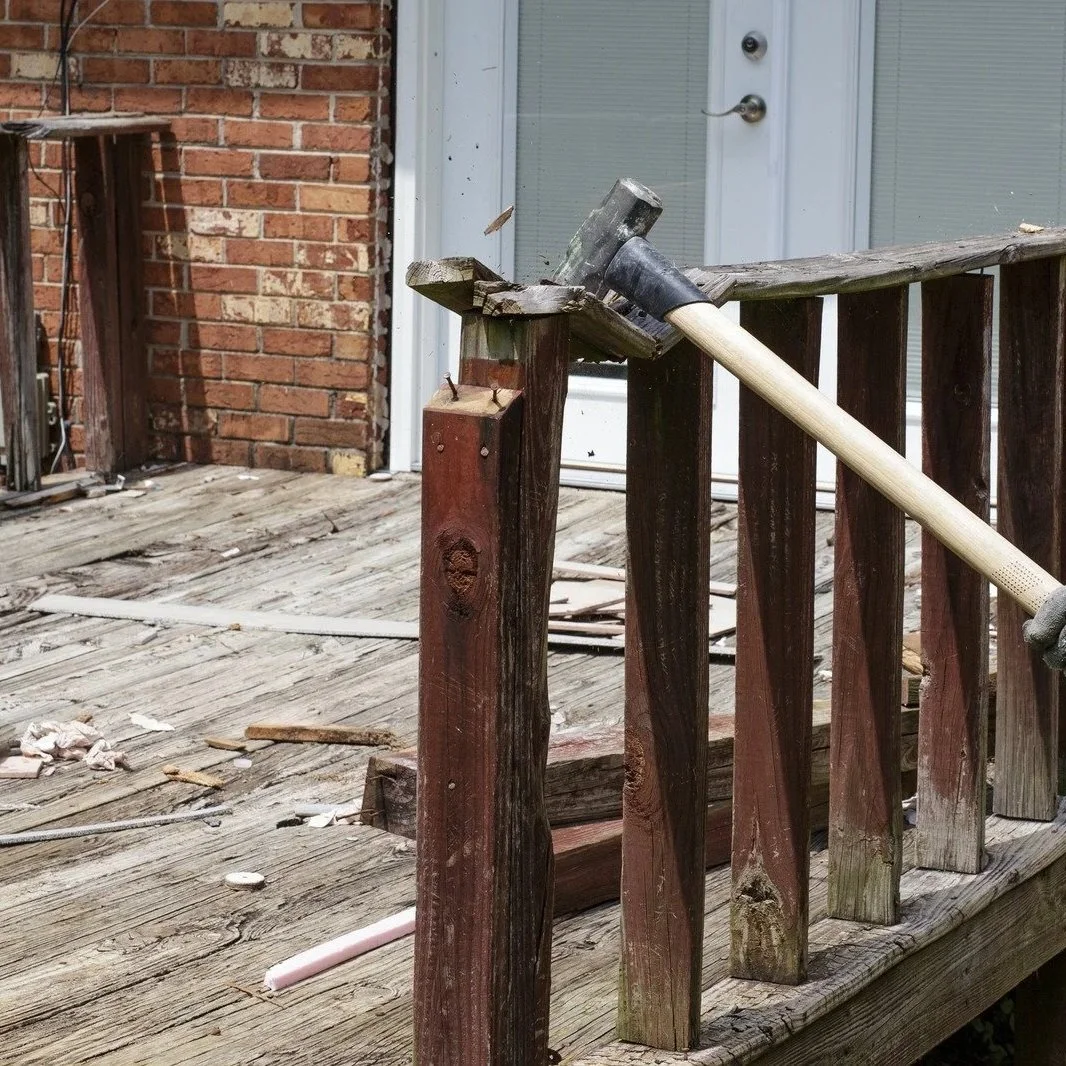
Quick Answer: A deck is heading toward unsafe when you find soft or spongy boards, rot a screwdriver sinks into, wobbly or loose railings, soft or loose stairs, rusted or pulling fasteners and connectors, and a failing ledger board where the deck attaches to the house. Surface graying and splinters are cosmetic, but anything structural — boards, railings, stairs, joists, ledger — that's soft, loose, or rotted is a safety issue. Maryland's rain, humidity, and freeze-thaw accelerate the rot. Catching these signs early means a repair instead of a failure under someone's weight.
A deck spends its whole life outdoors, taking the weather, and in Maryland, that means rain, humidity, snow, and freeze-thaw, all working on the wood and the connections year-round. Most of the time, a deck looks fine right up until a board flexes underfoot or a railing gives a little when you lean on it. Those moments are warnings. Knowing the signs that a deck is becoming unsafe — and acting on them before they turn into a failure — is what keeps a backyard gathering from ending in an injury.
A Deck Fails at Its Weak Points, Often Out of Sight
A deck is a structure, and like any structure, it fails where it's weakest and where water collects. The danger is that the most serious problems often aren't the ones you see first. The surface boards might look weathered, but okay, while the joists beneath, the ledger where the deck meets the house, or the railing posts are quietly rotting or working loose. So checking a deck means looking past the surface to the structure — the parts that actually hold weight and keep people from falling. The signs below are the ones that signal lost strength, not just age.
The Signs to Act On
Soft or Spongy Boards
Walk the deck and feel for boards that are soft, spongy, or bounce underfoot. That softness means rot inside the wood, even if the surface looks intact, and rotted wood can break under weight. Soft boards are one of the clearest signs that a deck is moving toward unsafe conditions and needs replacing.
Rot a Screwdriver Sinks Into
Probe suspect spots — board ends, anywhere that stays damp, and around the joists and posts — with a screwdriver. If it pushes in easily or the wood crumbles, that's rot, and rot spreads to neighboring wood. Maryland's humidity and freeze-thaw drive this decay, so it's worth checking the spots that hold moisture. Wood that fails the probe needs to be replaced, and the framing around it checked.
Wobbly or Loose Railings
Grab the railings and push. A railing that wobbles, flexes, or feels loose is a serious hazard because railings are what keep people from falling off the deck. Loose or rotted railing posts and connections are among the most dangerous deck problems, and a railing that moves needs repair before anyone leans on it.
Soft or Loose Stairs
Test the stairs for soft treads, loose connections, and wobble. Stairs are a common failure point, and a fall risk — a soft tread can give way, and a loose stringer can shift. Any movement or softness in the stairs is a sign they need attention before use.
Rusted, Loose, or Pulling Fasteners
Look at the hardware — screws, nails, bolts, joist hangers, and connectors. Rusted, loosening, or pulling fasteners mean the connections holding the deck together are weakening. Corrosion is accelerated by moisture, and failing connectors can let parts of the deck separate. Hardware that's rusted through or backing out is a structural warning.
A Failing Ledger Board
The ledger board attaches the deck to the house, and it's one of the most critical and most dangerous points. Signs of trouble include rot in the ledger, pulling away from the house, missing or corroded fasteners, or gaps opening up. A failing ledger can drop an entire deck away from the house, so it deserves close attention.
| Sign | Worn or unsafe | Action |
|---|---|---|
| Gray, faded, surface splinters | Cosmetic | Clean and refinish |
| Soft or spongy boards | Unsafe (rot) | Replace; check joists |
| Screwdriver sinks in | Unsafe (rot) | Replace board and framing as needed |
| Wobbly railings | Unsafe | Repair before use |
| Soft or loose stairs | Unsafe | Repair before use |
| Rusted/pulling fasteners, failing ledger | Unsafe (structural) | Address promptly |
The railings, stairs, and ledger board are the deck failures most likely to seriously hurt someone — a railing giving way, a stair collapsing, or a ledger pulling off the house can drop a person or a whole section of deck. If any of these is loose, soft, or pulling away, keep people off the deck until it's inspected and repaired.
Cosmetic vs. Structural — Know the Difference
Not every worn-looking deck is unsafe. Surface graying, fading, light splintering, and peeling stain are cosmetic — they affect looks and comfort, and the fix is cleaning, sanding, and resealing. A deck that's structurally sound but weathered just needs a refresh and protection from the elements. The signs that mean unsafe are structural: soft or rotted wood, wobbly railings, loose or soft stairs, failing fasteners, and a compromised ledger. The way to tell them apart is to test with your hands and a screwdriver rather than judging by appearance, and to pay special attention to the parts that hold weight and prevent falls. Catch the structural signs while they're early, and you get a repair; ignore them, and you risk a failure under load.
Frequently Asked Questions
Test it with your hands and feet, not just your eyes. Walk the boards feeling for soft or spongy spots, probe suspect wood with a screwdriver for rot, shake the railings, test the stairs, and check the fasteners and the ledger where the deck meets the house. Firm wood and solid connections mean it's sound; soft, rotted, loose, or pulling findings — especially in railings, stairs, or the ledger — mean it needs repair before use. Cosmetic weathering alone doesn't make a deck unsafe.
The railings, stairs, and the ledger board. A railing that gives way or a soft stair tread can cause a fall, and a failing ledger — where the deck attaches to the house — can drop an entire section under weight. These structural elements are often more critical to safety than the surface boards, so they deserve special attention. Any weakness in them should be treated as urgent and addressed before the deck is used again.
Press on boards to feel for soft or spongy areas, and use the screwdriver test: push a screwdriver into suspect spots — board ends, damp areas, and around joists, posts, and the ledger. Healthy wood resists; rotted wood lets the tool sink in or crumbles. Maryland's humidity and freeze-thaw drive rot in moisture-holding spots, so check those carefully. If wood fails the test, replace it and inspect the surrounding framing, since rot spreads.
Not necessarily. Graying, fading, and light splintering are cosmetic results of weathering — the surface looks tired but may still be structurally sound. That kind of wear calls for cleaning, sanding, and resealing, not replacement. A deck becomes unsafe when the structure loses strength: soft or rotted boards, wobbly railings, loose stairs, failing fasteners, or a compromised ledger. Check whether a gray board is also soft before assuming it's dangerous — looks and strength are different things.
At least once a year is wise, ideally in spring after winter's freeze-thaw and moisture have done their work, plus a look after any major storm. Maryland's rain, humidity, snow, and freeze-thaw cycles steadily wear deck wood and connections, so regular checks catch developing rot and loosening hardware before they become hazards. Pay particular attention each time to the railings, stairs, and ledger, since those are the failures most likely to cause injury.
Catch the Structure Before It Gives
A deck heads toward unsafe at its structural points — soft or rotted boards, wobbly railings, loose stairs, failing fasteners, and a compromised ledger — often while the surface still looks merely weathered. Cosmetic graying just needs refinishing, but anything soft, loose, or pulling is a safety issue, and Maryland's weather drives the rot that causes it. Check with your hands and a screwdriver, give the railings, stairs, and ledger extra attention, and act on the structural signs early. That's the difference between a repair and a deck that fails under someone's weight.
Not sure if your deck is just weathered or actually unsafe? — Get it inspected and repaired by a woman-owned local team before someone gets hurt. Elite Edge Painting & Remodeling serves Parkville, Baltimore, Towson. Call (443) 601-5233.
