
What Causes Roof Flashing to Leak? A Diagnostic Guide
Quick Answer: Flashing leaks almost always trace back to one of five causes: metal that has flexed loose from repeated temperature swings, sealant that dried out and cracked, corrosion at the nail holes, a shortcut taken during the original installation, or physical damage from a storm or foot traffic. The signs usually show up as a stain near a chimney or skylight, or a musty smell in the attic, long before water reaches your ceiling.
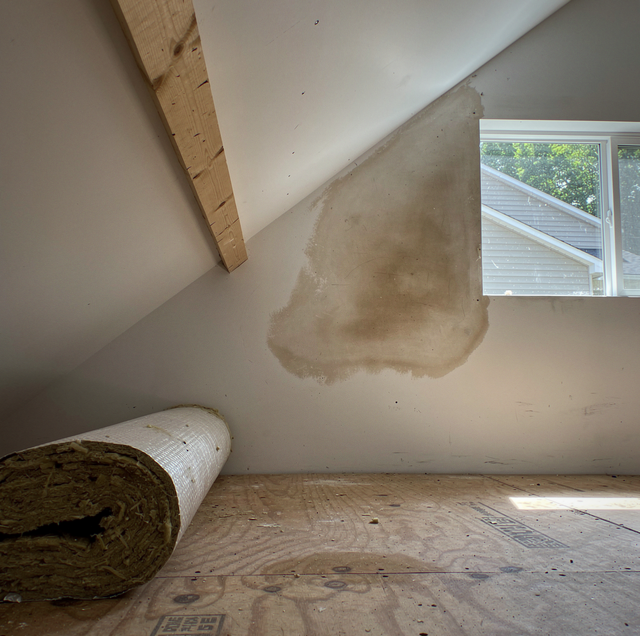
A hard rain rolls through, and a day or two later a homeowner spots it: a faint brown ring spreading across the ceiling near the chimney, or a damp line creeping down the drywall under a skylight. There's no visible drip, no missing shingle, nothing wrong that a glance from the driveway would catch. That kind of stain almost never means the roof itself failed. It means one narrow seam, somewhere flashing meets shingles, metal, or masonry, let water through.
What Flashing Actually Does On Your Roof
Flashing is easy to overlook because it's a small share of the total roof surface, tucked at edges and transitions rather than spread across open slopes. But when it fails, the timeline above is exactly what plays out: a stain shows up with no obvious cause, weeks or months after the roof itself would otherwise pass a casual inspection.
That stain almost always starts at flashing, not at the shingles themselves. Flashing is the metal that seals the places where your roof isn't just one flat, uninterrupted plane: around chimneys, along valleys where two roof slopes meet, around skylights, and where a roof butts up against a wall, dormer, or vent pipe. Shingles are built to shed water when they're laid flat and overlapping in a straight run. At every place the roof changes shape, though, shingles alone can't seal the joint. Flashing bridges that gap with formed metal, usually aluminum, galvanized steel, or copper, tucked under the shingle courses and sealed at the edges so water runs over it and off the roof instead of down into the seam.
Because flashing sits at every transition point on the roof, it's also where the roof takes the most stress. A flat run of shingles moves as one piece. A joint where metal meets masonry, or where two roof planes fold into a valley, has to accommodate two different materials moving at two different rates. That's the root of almost every flashing leak you'll ever deal with.
Thermal Cycling Works The Metal Loose Over Time
Metal flashing expands when it heats up in direct sun and contracts again overnight or with a passing rain. A day that swings from a cold, clear morning to a sunny afternoon can put real movement into a chimney's metal collar. Do that across enough seasons, especially with the freeze-thaw cycles that hit metal hardest in winter, and the fasteners holding the flashing in place start to work loose in their holes, and the metal itself can develop small ripples or gaps at the seams.
This is the one mechanism that's built into the material by design. It doesn't mean flashing is defective. It means flashing is a mechanical assembly, not a solid barrier, and mechanical assemblies loosen with repeated motion, just as a screw backs out of a board that flexes every day. Counter-flashing set into a chimney's mortar joints is especially exposed to this, since brick and metal expand and contract at different rates, and the seam between them is doing double duty: sealing against water and absorbing the resulting movement mismatch.
Sealant Breaks Down Long Before The Metal Does
Flashing depends on sealant or roofing cement at its edges and seams, and that sealant is the weakest link in the whole system. Sun exposure dries out caulk and roofing sealant, causing them to crack, shrink, and pull away from the metal well before the flashing itself rusts through or wears out. Once a bead of sealant separates even slightly, wind-driven rain finds the gap.
A hairline crack in the sealant around a chimney or skylight is often the first physical sign of a coming leak, and it's usually visible from a ladder at the gutter line without setting foot on the roof.
This is also why a flashing leak can show up seasons after a roof was installed with no other problems. The shingles can still have plenty of service life left while the sealant at a single joint has already failed. It's a maintenance item, not a one-time install-and-forget component, and it's often the fastest fix available once it's caught early.
Corrosion Opens Tiny Holes At The Fasteners
Every flashing installation is held down with nails or screws driven through the metal, and each fastener hole is a manufactured weak point. Galvanized steel flashing loses its protective coating over the years, especially where water sits or where two dissimilar metals touch and trigger galvanic corrosion. Once that coating is gone, rust starts eating outward from the nail hole itself. A hole that started as a snug fit around a fastener slowly widens into a gap water can pass through even when the fastener is still seated tight.
Copper and properly coated aluminum flashing resist this far longer, which is part of why the choice of flashing material matters when a section of the roof is repaired or replaced. But even the better materials eventually show wear at the fastener points, since that's simply where the metal was punctured to begin with.
A Rushed Original Installation Sets Up A Slow Failure
Not every flashing leak traces back to age or weather. A surprising number trace back to how the flashing was installed in the first place. Step flashing along a wall or dormer needs to be layered piece by piece with each course of shingles, one small L-shaped piece per shingle row, so water always runs down and over the next piece below it. If a crew instead runs a single long strip of flashing up that same slope to save time, it looks fine on day one, but it has no way to shed water as effectively, and it tends to leak within a few seasons.
Valley flashing has its own version of this problem. An open valley needs to be wide enough, and the shingles on either side trimmed back correctly, so water has a clear channel to run down. Cut the shingles too tight over that valley's metal channel and the channel itself narrows, which is a capacity problem: in a heavy storm, more water tries to pass through a smaller opening than the flashing was sized to carry, and it can back up under the shingle edges instead of running clear. A separate mistake causes the more serious failure: nailing inside that valley's fastener-free zone, or scoring the metal with a utility knife while trimming shingles in place, punctures the one spot on the roof carrying the most concentrated water flow. A roof can look complete and pass a casual glance from the ground while still carrying either shortcut, and it usually only shows itself the first time a storm sends real water volume through that valley.
Storms, Debris, And Foot Traffic Cause Physical Damage
Flashing doesn't have to wear out gradually to fail. It can be damaged outright. Hail dents and creases metal flashing the same way it dents siding and gutters, and a dented seam doesn't shed water the way a smooth one does. Wind-driven branches and debris can lift the edge of a flashing or tear it entirely loose from its sealant bed. Even foot traffic from a satellite dish install, a chimney sweep, or a previous repair can bend a piece of flashing just enough to open a seam that had been sealing fine for years.
This kind of damage tends to occur suddenly, often tied to a specific storm, rather than developing slowly, as with corrosion or sealant failure. If a leak appears right after high wind, hail, or a fallen limb, physical damage is the first thing worth checking, and it's also the scenario most likely to be covered under a homeowner's insurance policy, which is where storm-damage claim assistance becomes useful rather than something you have to sort out alone.
Spotting A Flashing Leak Before It Reaches Your Ceiling
The earliest signs of a flashing leak rarely show up as an actual drip. Water tends to travel along a rafter or down a wall cavity before it ever soaks through drywall, so by the time you see a stain on the ceiling, the leak has usually been active for a while. Catching it earlier means checking a few specific places.
From inside, an attic is the best early-warning system on the whole house. A flashing leak often shows up first as dark streaking on the underside of the roof deck near a chimney or skylight shaft, or as a musty smell that wasn't there before, well before any stain reaches the living space below. From outside, look at the visible edges of flashing around chimneys, skylights, and where the roof meets a wall or dormer: rust streaks running down the metal, gaps where sealant has pulled away, or shingles that look lifted or curled right at that transition line are all worth a closer look.
Roof-height inspection and any repair work at flashing joints should be left to a professional. A ladder at the gutter line for a visual check is one thing; walking a sloped roof to inspect or reseal flashing is a fall risk that isn't worth taking on yourself.
If you catch staining, rust, or a musty attic smell, the smart move is a professional inspection before the next heavy rain, not after a stain has already spread across a ceiling. A trained eye can usually tell the difference between a simple resealing job and a section of flashing that needs to be replaced, and catching it at the sealant-crack stage is a much smaller job than catching it after months of hidden water intrusion into the roof deck and framing.
Frequently Asked Questions
Not automatically. Flashing that's still smooth, tightly seated, and free of rust can often be lifted, cleaned of old sealant, and reset with fresh sealant during a shingle replacement. But if flashing already shows corrosion at the fastener holes, a rippled or dented surface, or step flashing installed as one long strip instead of individual pieces, it should be swapped out at the same time. Reusing compromised metal just resets the clock on a leak that's already partway to happening, and a roofer replacing shingles is in the best position to make that call while the flashing is already exposed.
A visual check from the ground or a ladder once or twice a year, plus a look right after any major storm, catches most problems while they're still small. Roof sections prone to ice buildup along the eaves, or shaded slopes where moss takes hold, are worth checking more often, since both conditions accelerate sealant and metal wear at nearby flashing joints.
No. Most flashing failures are localized to a single joint or run of step flashing, and a repair that resets the sealant or replaces the affected section of metal is usually sufficient. A full roof replacement only becomes the right call if the flashing failure is one symptom among several, such as widespread shingle wear or decking damage discovered once the flashing is opened up.
Valley flashing is a continuous metal channel running down the fold where two roof slopes meet, carrying the combined runoff from both sides. Chimney flashing is built from separate pieces, base flashing along the roof deck and counter-flashing set into the masonry above it, so the two surfaces can move independently without opening a gap. Because they're built differently, they also tend to fail differently: valleys usually fail due to volume and debris; chimneys usually fail due to movement between the roof and the masonry.
Location and timing are the biggest clues. A flashing leak traces back to one fixed point, a chimney, skylight, valley, or wall transition, and it typically shows up during or right after rain. An ice-dam leak shows up in winter after a thaw cycle, usually along the eaves well below any flashing, as trapped meltwater backs up under the shingles. Condensation looks different again: it tends to appear as broad, damp patches on the underside of the roof deck or beads on nail tips in an unheated attic, and it shows up in cold weather whether or not it's actually raining outside. If the staining lines up with a specific flashing joint and follows a storm, flashing is the more likely cause.
If the leak followed a specific storm with hail or high wind, it's worth having the damage recorded and photographed before any repair work starts, since that record is what supports a storm-damage claim. Getting help identifying and recording that damage, and coordinating the claim itself, is a separate step from the repair, and the two can usually be lined up together rather than one delaying the other.
Schedule a roof flashing inspection — catch a small sealant or corrosion issue before it turns into interior water damage. Elite Edge Painting & Remodeling serves Parkville, Baltimore, and Towson. Call (443) 601-5233.
